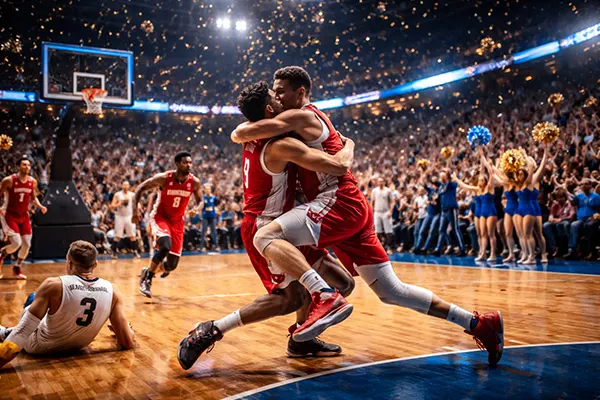
March Madness 2026: Biggest Upsets, Unexpected Heroes and Defining Stories
The 2026 NCAA Men’s Basketball Tournament once again confirmed why March Madness remains one of the most unpredictable events in global sport. This year’s bracket delivered a mix of dramatic upsets, breakout individual performances and compelling narratives that extended beyond the court. From underdog programmes rewriting expectations to experienced squads collapsing under pressure, the tournament reflected broader shifts in college basketball, including transfer portal influence, NIL-driven roster construction and evolving tactical approaches.
Major Upsets That Redefined the 2026 Bracket
The early rounds of March Madness 2026 were dominated by lower-seeded teams outperforming expectations, particularly in matchups where defensive discipline and tempo control proved decisive. One of the most discussed results came when a No. 13 seed eliminated a top-ranked conference champion, exploiting weaknesses in transition defence and forcing turnovers at critical moments. These outcomes were not purely random; they highlighted how mid-major programmes have improved recruitment and analytics-driven preparation in recent years.
Another notable trend was the vulnerability of teams heavily reliant on a single star player. Several higher seeds struggled when their primary scorer faced aggressive double teams, exposing a lack of offensive depth. Opponents with balanced scoring options and structured ball movement were able to dictate pace and create higher-percentage opportunities. This shift suggests that roster versatility is becoming more valuable than individual dominance in tournament settings.
Close finishes also played a central role in shaping the bracket. Multiple games were decided in the final possessions, often influenced by late-game decision-making rather than overall statistical superiority. Teams that executed well under pressure—especially from the free-throw line—advanced, while others failed to convert key chances. These narrow margins reinforced how psychological resilience is as important as technical ability during March Madness.
Why Lower Seeds Continue to Succeed
The continued success of lower-seeded teams in 2026 can be linked to structural changes within college basketball. The transfer portal has allowed smaller programmes to acquire experienced players who previously competed at higher levels, effectively reducing the talent gap. This redistribution of players has created more competitive matchups across the bracket, particularly in the early rounds.
Coaching strategies have also evolved. Many underdog teams now rely on advanced scouting reports and data analysis to identify exploitable patterns in opponents’ play. By slowing down the tempo, limiting possessions and focusing on defensive rotations, they can neutralise more athletic teams. This tactical discipline often forces favourites into uncomfortable situations, increasing the likelihood of mistakes.
Additionally, the psychological aspect cannot be overlooked. Lower seeds often enter games with less external pressure, allowing them to play with greater freedom. In contrast, top seeds carry expectations that can affect shot selection and decision-making in tight moments. The 2026 tournament demonstrated that mental composure remains a critical factor in achieving upset victories.
Unexpected Heroes Who Shaped the Tournament
Every March Madness produces standout individuals, but 2026 featured several players who emerged from relative obscurity to become central figures in their teams’ success. These athletes were not necessarily the highest-ranked recruits, yet their performances in high-pressure situations proved decisive. Their impact extended beyond scoring, often influencing defensive intensity and team cohesion.
One recurring pattern was the emergence of experienced guards transferring from smaller conferences. These players demonstrated strong court vision and decision-making, particularly in late-game scenarios. Their ability to control pace and minimise turnovers allowed their teams to maintain composure against more physically dominant opponents. This highlights the growing importance of experience and leadership in tournament basketball.
Frontcourt players also played a key role, particularly those capable of stretching the floor with outside shooting. Modern tactical systems increasingly rely on spacing, and big men who can shoot from mid-range or beyond the arc created mismatches that traditional defensive schemes struggled to contain. These versatile players forced opponents to adapt, often disrupting established defensive structures.
The Role of Transfers and Development Pathways
The transfer portal has significantly influenced player development pathways, and the 2026 tournament provided clear evidence of its impact. Many of the standout performers had previously transferred in search of increased playing time or a better tactical fit. This flexibility allows players to maximise their potential while strengthening teams that might otherwise lack depth.
At the same time, programmes that invested in long-term development benefited from continuity and chemistry. Teams with a core group of players who had competed together for multiple seasons often displayed better defensive coordination and communication. This balance between experienced transfers and internally developed talent proved effective in deep tournament runs.
NIL opportunities have also contributed to player retention, enabling programmes to keep key contributors for longer periods. As a result, the gap between elite and mid-tier teams continues to narrow. The 2026 tournament illustrated that success is no longer determined solely by recruiting rankings but by how well players are integrated into a cohesive system.
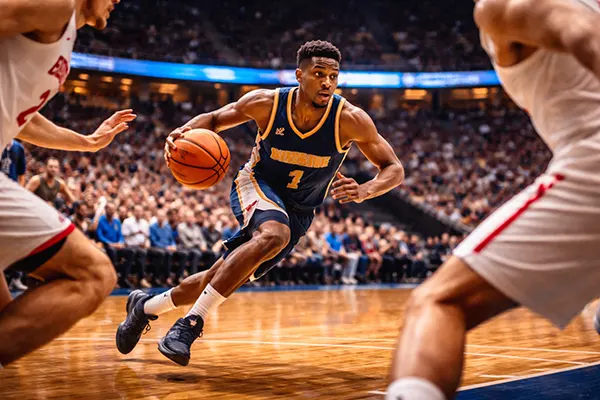
Media Narratives and Cultural Impact of March Madness 2026
Beyond the games themselves, March Madness 2026 generated significant media attention around emerging storylines. One of the most discussed narratives involved smaller universities gaining national recognition through deep tournament runs. These programmes not only attracted new fans but also increased visibility for their athletic departments and academic institutions.
Another key storyline centred on coaching strategies and leadership styles. Several head coaches received widespread praise for their ability to adapt mid-game, particularly in response to unexpected tactical challenges. Their decisions regarding rotations, defensive schemes and timeout usage often proved decisive in close contests, reinforcing the importance of in-game management.
The tournament also highlighted broader trends in college basketball, including the influence of analytics and sports science. Teams increasingly rely on data-driven insights to optimise performance, from shot selection to player workload management. This analytical approach is reshaping how the game is played at the collegiate level, with clear implications for future tournaments.
How 2026 May Influence Future Tournaments
The outcomes of March Madness 2026 are likely to influence how teams prepare for future competitions. Coaches may place greater emphasis on roster depth and versatility, recognising that reliance on a single star player can be a liability. Balanced scoring and defensive adaptability will continue to be key priorities.
Recruitment strategies are also expected to evolve. Programmes may focus more on acquiring experienced players through the transfer portal rather than relying solely on high school prospects. This shift reflects the increasing importance of maturity and game intelligence in high-stakes environments.
Finally, the growing role of media coverage and digital engagement will shape how teams build their identity. Programmes that can effectively manage both on-court performance and off-court narratives are better positioned to attract talent and support. March Madness 2026 demonstrated that success in modern college basketball extends beyond the scoreboard.