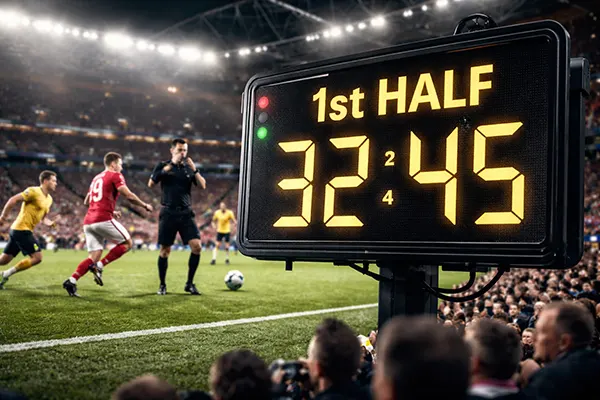
First-Half Totals in Football Betting: When It Makes Sense to Separate Them from the Match Total
In football betting, totals are usually discussed in the context of the full match. However, experienced bettors often analyse the first-half total separately because the dynamics of the opening 45 minutes can differ significantly from the rest of the game. Teams approach the beginning of matches with specific tactical intentions, physical intensity is different, and scoring patterns frequently change after the interval. Understanding when the first-half total deserves its own analysis can help avoid misleading conclusions based on the full-match line. Some matches are structured in a way that produces early goals, while others remain cautious until the second half. Studying these patterns allows bettors to identify situations where the first-half market offers clearer value than the overall total.
Why First-Half Totals Behave Differently from Match Totals
The first half of a football match often reflects tactical preparation rather than adaptation. Coaches usually start with a clear plan, and teams follow structured positioning. Because of this, the first 30–40 minutes can be predictable in certain leagues or matchups. Defensive teams frequently focus on stability early on, which leads to fewer chances and lower scoring frequency.
Statistical studies from major European leagues between 2022 and 2025 show that roughly 44–47% of all goals are scored in the first half, while the majority arrive after the break. Fatigue, substitutions, and tactical changes increase the likelihood of late scoring. This difference explains why first-half totals are normally set much lower than match totals.
Another factor is risk tolerance. Teams fighting for points often avoid early mistakes and increase attacking pressure only later. When both sides adopt a cautious opening strategy, the first-half total market can diverge strongly from expectations based on the full-match line.
League and Team Profiles That Influence Early Scoring
Some leagues historically produce faster starts than others. For example, the Dutch Eredivisie and the German Bundesliga frequently show higher first-half scoring rates because of attacking styles and open defensive structures. In contrast, leagues such as Serie A or certain Scandinavian competitions often see slower first halves.
Team identity also matters. Clubs that rely on high pressing or aggressive attacking transitions tend to create early chances. Teams with possession-based systems may dominate the ball but still produce relatively few shots in the opening phase while building rhythm.
Analysing historical goal timing is therefore essential. When a team consistently scores or concedes early, separating the first-half total from the match total becomes a logical analytical step rather than a speculative guess.
Situations Where the First-Half Total Offers Better Value
One of the most common situations appears when bookmakers adjust the match total because of attacking reputations, but the teams involved actually start matches slowly. In such cases, the full-match line may be high while the first-half line still reflects conservative expectations.
Cup matches and knockout games can also create interesting differences. Teams often begin cautiously because conceding early may change the entire tie. Even clubs known for attacking football sometimes prioritise defensive organisation during the first half of these matches.
Another example occurs when one side is a strong favourite. The underdog may defend deep during the opening minutes, aiming to survive early pressure. This frequently leads to a quiet first half followed by a more open second half once the match situation changes.
Using Match Context to Evaluate First-Half Markets
Match context often determines whether early goals are likely. Derby matches, relegation battles, and decisive league fixtures tend to produce tense openings. Players focus on avoiding mistakes rather than taking immediate risks.
Weather conditions and pitch quality can also influence early tempo. Heavy rain, strong wind, or poor playing surfaces often reduce attacking efficiency during the opening stages while teams adapt to conditions.
Another contextual element is scheduling. When teams play several matches within a short period, coaches may prioritise controlled beginnings to conserve energy. This tactical pacing frequently suppresses early scoring opportunities.

Analytical Methods for Evaluating First-Half Totals
Reliable analysis begins with data. Reviewing goal distribution across recent seasons helps identify teams that regularly produce early or late scoring. Many statistical databases provide breakdowns of goals scored between minutes 1–45 and 46–90.
Shot creation metrics are also valuable. Expected goals, shots on target, and penalty-area entries during the first half reveal how aggressively a team begins matches. Even when goals are not scored, these indicators highlight offensive intent.
It is also important to compare the bookmaker line with historical averages. If the market sets a first-half total significantly higher than typical goal production for the teams involved, the line may reflect reputation rather than realistic probability.
Practical Indicators Bettors Often Monitor
One useful indicator is the percentage of matches where a team scores before the 30th minute. Clubs that frequently open scoring early tend to push the tempo from the first whistle. This statistic can strongly influence first-half totals.
Another important metric is defensive stability in the opening stages. Some teams concede very few goals early but struggle later when the game becomes more open. Recognising this pattern helps separate first-half expectations from full-match scoring.
Finally, tactical matchups should always be considered. When a high-pressing side faces an opponent comfortable playing through pressure, the first half can produce numerous chances. When both teams prefer structured defending, the opening period may remain cautious and low-scoring.